Fintrace Window
1. Industry Analysis: The Hai Phong Industrial & Port Enclosure Challenge
Hai Phong, as northern Vietnam’s primary logistics hub and manufacturing capital, is undergoing an unprecedented industrial expansion. Deepwater ports like Lach Huyen, combined with sprawling zones such as the DEEP C Industrial Zone cluster and VSIP Hai Phong, house heavy electronics manufacturing, automotive assembly lines, chemical complexes, and intensive shipping operations.
However, the geographical profile of Hai Phong presents massive engineering challenges. Located in a coastal typhoon belt with intense humidity, high salt spray deposition rates, and dust-laden winds, buildings require advanced facade elements. Traditional window screens and fixed partitions corrode rapidly under high atmospheric salinity, leading to mechanical failures and mesh degradation within short operational lifecycles.
The Coastal Environmental Variable: Atmospheric salinity accelerates galvanic corrosion on untreated aluminum tracks, while particulate dust from port activities causes track clogging. To maintain high airflow rates for cooling without compromising on pest control or dynamic barriers, industrial buyers require high-tensile fiberglass mesh fabrics and heavy-wall anodized structural aluminum alloys.
2. Market Drivers: The Shift Toward Smart Retractable & Sliding Barriers
Across global commercial projects, static enclosure solutions are being phased out in favor of dynamic retractable and sliding screen systems. The modern architectural trend highlights two critical demands: thermal efficiency and environmental adaptability. In Vietnam’s warm climate, maximizing natural cross-ventilation while excluding sand, pollen, and vectors is critical for sustainability certification (e.g., LEED, LOTUS).
Key global and regional market drivers include:
- Automated Building Facades: Integration of motorized insect screening and shading systems with central Building Management Systems (BMS). Sensors retract screens during high-velocity wind events to protect structural integrity.
- Stricter Sanitary Regulations: Food processing plants (such as those in Nam Cau Kien IZ) and high-precision electronics manufacturers require absolute separation between internal production zones and outdoor vector risks.
- Bioclimatic Architectures: Modern offices and hospitality spaces utilize bioclimatic pergolas and retractable sunroofs that require heavy-duty horizontal sliding screening units to keep pests out while maintaining outdoor connection.
3. China Factory 4.0: Foshan Fintrace Supply Chain Advantages
To meet the specific requirements of international projects and Vietnamese developments, Foshan Fintrace Window Co., Ltd. implements a Factory 4.0 production framework at its Shandong manufacturing base. The modern 40,000+ square meter facility leverages cutting-edge technology to achieve industry-leading supply chain efficiencies:
Automated Weaving & Coating
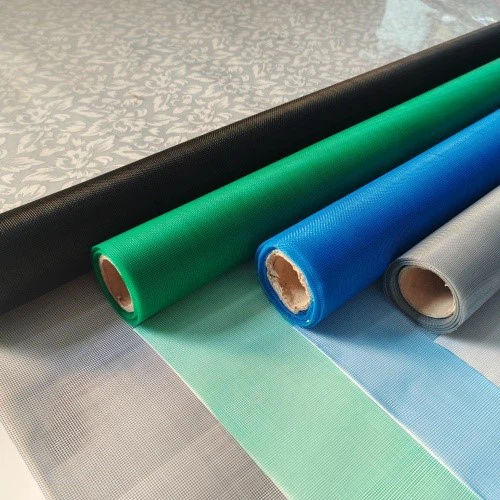
Fintrace employs high-speed automated loom machines that ensure consistent tensioning and uniform opening size across every single square meter of fiberglass mesh fabric.
Advanced Finishing Technology
Using thermal set processing import tech, our mesh achieves zero-slippage yarn locking, extreme dimensional stability, and high tear-resistance parameters under mechanical loads.
Logistical Proximity to Vietnam
By leveraging close freight shipping routes from Shandong and Guangdong directly to Hai Phong Port, Fintrace reduces standard container transit times to less than 5 days.
With a daily manufacturing volume of up to 300,000 square meters, we can fulfill high-volume orders for large industrial zone installations while offering tailor-made customizations for specialized architectural profiles. Our QA laboratory runs continuous salt spray chambers, tensile strength jigs, and UV aging tests to ensure all materials sent to Vietnam survive the marine microclimate.
4. Localized Application Scenarios in Hai Phong Districts
To illustrate how these systems function in practical settings, we examine four core industrial installations in the region:
Scenario A: Coastal Logistics Warehouses (Dinh Vu Port Area)
Large distribution centers suffer from high wind loads when cargo doors are open. Our Reinforced Windproof Left and Right Retractable Screen systems are deployed on exterior ventilation panels. Equipped with anti-blowout zipper systems running inside heavy-duty aluminum tracks, these screens prevent insect ingress while resisting sudden coastal wind pressure spikes up to Class 5 wind speeds.
Scenario B: Electronics Cleanrooms (VSIP Hai Phong)
Modern fabrication labs require strictly regulated internal air purity. Standard mesh cannot prevent micro-particle contaminants. Using Fintrace's chemical fiber wire netting and superfine fiberglass configurations, local factories achieve optimal structural screening. The custom roll-up cassettes protect the screen fabric from contaminants when the ventilation portals are mechanically shut.
Scenario C: High-End Green Building Developments (Cat Ba Eco-Resorts)
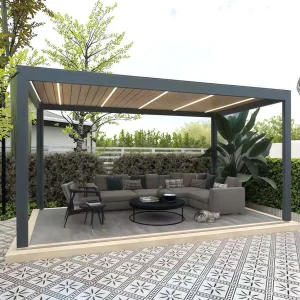
Eco-tourism structures require wide unobstructed vistas with reliable insect protection. Large-span Bioclimatic Electric Louvered Pergolas and retractable roof systems utilize motorized mosquito mesh that blends seamlessly into the architecture. The high-transparency mesh ensures breathtaking sea views without letting in persistent regional mosquitoes or maritime flies.