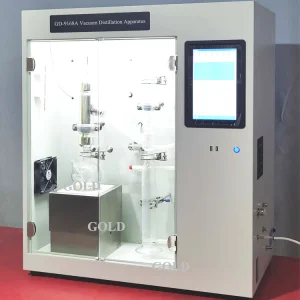
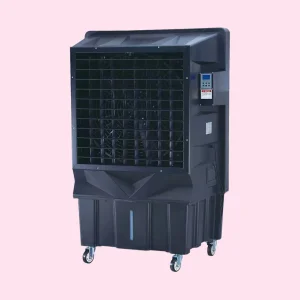
Discover our key engineering and industrial product lines engineered for global procurement structures.
Daily Capacity (sqm)
Factory Area (sqm)
Est. Core History
Quality Checked
Navigating cost metrics, buyer expectations, and localized application strategies in international supply chains.
Strategic shifting from unit cost calculations to Total Cost of Ownership (TCO) evaluation. In modern global trade, unit cost is only 60% of the financial picture; freight, logistics mitigation, quality variance, and custom clearances construct the remaining balance.
Integrating localized resilience factors into wholesale pricing models. Global buyers favor manufacturers that offer raw material index pricing, ensuring transparency when global commodities (like aluminum or raw fiberglass) undergo extreme fluctuations.
Automated manufacturing direct correlation with price flexibility. When automation controls material wastes, manufacturers gain margins to deploy customized pricing models for niche distribution partners globally.
Wholesale pricing strategy in the OEM (Original Equipment Manufacturer) and ODM (Original Design Manufacturer) sectors has shifted dramatically. Historically, cost-plus pricing was the default standard: calculate cost of goods sold (COGS), add a margin, and quote. However, digital transformation and predictive supply chain dynamics have rendered this simple model insufficient.
Today's market demands Value-Based and Tiered Incentive Pricing Models. These pricing systems analyze procurement volumes, customization complexity (tooling costs, custom molding, unique specifications), and delivery timelines. By understanding the buyer’s go-to-market model, exporters can design specialized pricing tiers that align the buyer's cost structures with the manufacturer's operational capabilities.
| Pricing Model | Primary Drivers | Best Application Scenario | Risk & Margin Profile |
|---|---|---|---|
| Cost-Plus Matrix | Direct Materials, Labor, Overheads + Standard Margin | Highly standardized bulk commodities | Low risk, but limits optimal margin extraction |
| Tiered Volume-Based | Scale Economics, Setup amortizations | Contract procurement with phased delivery schedules | Balanced. Increases client retention over long cycles |
| Value-Based Customization | NRE costs, IP protection, custom engineering value | Niche high-tech products and tailored equipment | High margin potential, requires rigorous engineering verification |
| Index-linked Variable | Raw Material Indices (LME Aluminum, Resin Indexes) | High-frequency raw material dependent items | Secures margin safety zones for exporters |
Modern procurement officers are no longer just looking at base FOB prices. The procurement team analyzes the total landing cost (LDP), supplier reliability indexes, and lead-time variability. Modern buyers prioritize transparency, and their search intent centers around "manufacturing scalability" and "factory direct custom pricing."
By tailoring pricing strategies to meet the specific requirements of regional distributors, manufacturers can build long-term business partnerships. For example, North American distributors often prefer consolidated DDP pricing structures, whereas APAC and European buyers often request highly transparent EXW or FOB terms to integrate with their own contract logistics providers.
Foshan Fintrace Window Co., Ltd. was founded in the mid-1980s and has grown into a professional manufacturer specializing in window screening materials. The company is located in one of China’s major fiberglass product manufacturing bases in Shandong. Covering an area of more than 40,000 square meters, Fintrace has developed into a large-scale production enterprise dedicated to the manufacturing of stealth window screens, fiberglass mesh cloth, and chemical fiber wire netting.
To ensure high product quality and stable production capacity, the company is equipped with multiple sets of precision, fully automated computer-controlled equipment imported from abroad. By adopting internationally advanced finishing and processing technologies, Fintrace has achieved a daily production capacity of up to 300,000 square meters. With strong technical capabilities and modern manufacturing facilities, the company maintains a leading position in the window screen mesh industry.

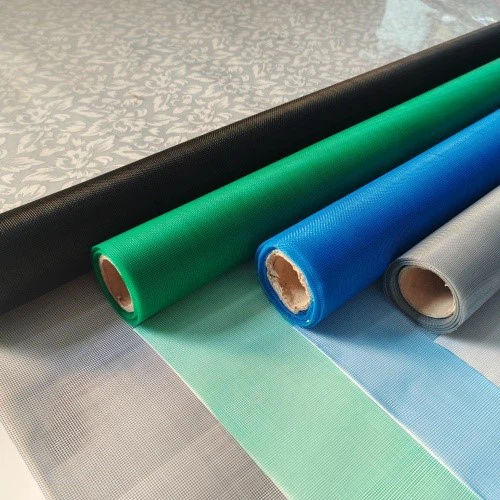
The manufacturing infrastructure of modern China has evolved beyond basic labor-intensive assembly to integrated Industry 4.0 smart platforms. Fintrace demonstrates this transition by using high-precision automated systems that reduce energy costs and limit material waste.
This localized efficiency in manufacturing allows Fintrace to offer a highly competitive wholesale pricing structure. Daily outputs of 300,000 square meters ensure economies of scale that protect margins against raw material price shocks. This guarantees international buyers stable supply rates even during periods of global supply chain instability.
Furthermore, standard products are supplemented by custom processing services based on specific customer requirements, ensuring a balance between volume efficiency and custom product needs.
How wholesale pricing adapts to diverse commercial and residential engineering applications globally.
Focuses on long-life insect screens and durable mesh systems. Pricing targets high volume, tiered discounts for building material distributors and real estate development suppliers.
Requires chemical fiber wire netting and reinforced fiberglass mesh for filtering, windbreaks, and hazardous environment containment. Pricing uses custom chemical finish add-ons calculated on a per-square-meter basis.
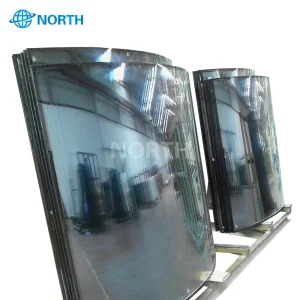
Integrates heavy-duty anti-theft screen structures and high-resistance double glazing building glass interfaces. Requires custom fabrication pricing with strict quality verification processes.
Expert insights on pricing models, MOQ structures, customization services, and procurement management.
OEM pricing is typically built on a cost-plus model where the client provides detailed product designs, and the factory optimizes production efficiency. ODM pricing includes non-recurring engineering (NRE) charges, design research, and intellectual property premiums, which are either billed upfront or amortized over initial production volumes.
Pricing is calculated based on screen mesh specifications (e.g., width, mesh count, raw material weight), volume tiers, and custom finishing treatments (such as flame retardant or high-durability coatings). We offer detailed EXW, FOB, and CIF price matrices based on target volumes.
High daily capacity (such as Fintrace's 300,000 square meters) allows manufacturers to negotiate better prices for bulk raw materials. These savings are passed on to global buyers as stable pricing, buffering them against raw material price spikes.
The standard industry practice is a 30% T/T deposit to secure raw materials and initiate production, with the remaining 70% balance paid against the Bill of Lading (B/L) copy. Customized terms are available for long-term contract partners based on credit evaluations.
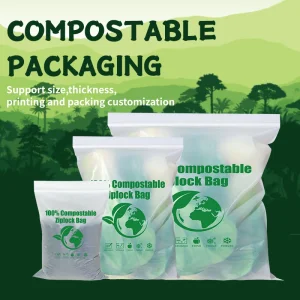
Custom packaging requires offset set-up fees. For large orders that meet the minimum packaging run sizes, these costs are fully absorbed into the standard unit price. For smaller orders, a separate setup charge may apply.
A secondary selection of export-ready goods, spanning structural fittings, protective packaging, and industrial chemicals.
 Fintrace Window