Why Is Airflow Through Window Screens Poor?

Time:2026-09-30 Author:Amelia
0%

Why does airflow through window screens often feel weaker than expected? The mesh looks open, yet a warm room can stay stuffy while a breeze barely stirs a curtain. A screen adds resistance to incoming air. Dirt, dense mesh, narrow openings, and limited wind can make that resistance more noticeable. So can a closed interior door or a window opened only a few inches.

Building scientist Allison A. Bailes III, known for explaining home performance and ventilation, often emphasizes the importance of air pathways. A useful paraphrase of that principle is: “Air needs both a pressure difference and a clear path to move.” This is not a verified verbatim quotation about window screens, but it helps explain why replacing mesh alone may not solve poor ventilation. The whole route matters. Check the screen, the window opening, and the room beyond it.

This guide explores How to improve airflow through window screens without overlooking practical details. We’ll look at mesh openness, screen cleanliness, window position, and cross-ventilation. A dusty screen can be easy to miss. So can a blocked path indoors. Small changes may help, but results depend on wind, building layout, and screen condition. One caveat: a more open mesh may admit more insects or debris. Better airflow is not always a simple trade. The useful question is what is restricting the air in your home.
Why Is Airflow Through Window Screens Poor?

How Window Screens Influence Airflow

Why Is Airflow Through Window Screens Poor?

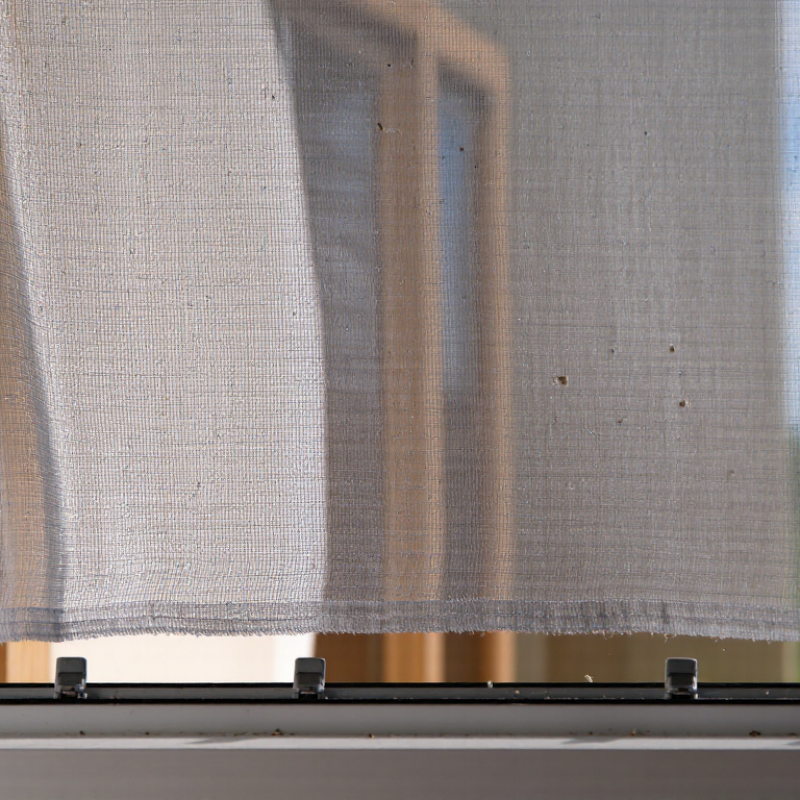
Window screens protect indoor spaces from insects, but their mesh quietly changes air movement. Each strand blocks a small portion of the opening. Together, those strands create resistance, especially when the mesh is dusty or tightly woven. Air also slows near the frame, where the clear opening becomes smaller than expected. During a home inspection, I often notice weak airflow at screened windows, even with strong outdoor wind. The problem is not always the screen alone.

Airflow depends on pressure differences, opening size, wind direction, and indoor layout. A screen on the sheltered side of a building may receive little pressure. An opposite window can work better because cross-ventilation gives air a clear path.

Furniture, curtains, and partly closed doors can interrupt that path. Try opening two windows on different walls, then compare the breeze at chest height. Small changes matter.

Keep the mesh clean with a soft brush or gentle vacuum attachment. Check for sagging, torn edges, or a screen positioned close to another barrier. Replacing damaged mesh may improve comfort, but tighter mesh can reduce flow further. I once assumed a wide window guaranteed fresh air. That assumption was incomplete. On calm days, a fan or warmer upper opening may be needed to create movement. Measure comfort in the room, not only by staring at the screen.

Physical Factors That Restrict Air Passage

Why Is Airflow Through Window Screens Poor?

Physical Factors That Restrict Air Passage

A window screen looks open, but its mesh can block a surprising amount of air. Each strand occupies part of the opening, reducing the free area available for movement. Fine mesh blocks more insects, yet it also creates greater resistance. Dust and pollen can collect between the wires, making those tiny passages narrower. I once blamed a weak fan for poor ventilation, but the screen was partly clogged.

Air pressure also matters. Wind must push through the mesh before entering the room. When indoor and outdoor pressure levels are nearly equal, airflow may become barely noticeable. A cross-breeze usually performs better because air has a clear exit path. Without that path, air can press against the screen and circulate slowly around the window instead.

The screen frame creates another restriction. Air moves fastest through the center, while the edges experience turbulence near the frame. A nearby wall, curtain, or furniture can disturb the flow further. In a simple home test, holding a tissue near different parts of the screen showed uneven movement. That test is useful, but it is not precise. Outdoor wind changes every few seconds, and room temperature creates its own rising currents. Even a clean screen may feel ineffective when the opening is small or the wind approaches at an awkward angle.

Why Is Airflow Through Window Screens Poor? - Physical Factors That Restrict Air Passage

Physical factor Measurable dimension Representative data How it can restrict airflow
Mesh density and wire thickness Mesh count, wire diameter, and calculated geometric open area A screen with 18 × 16 mesh and 0.011 in (0.279 mm) wire has an estimated geometric open area of about 66%. A 20 × 20 mesh with 0.013 in (0.330 mm) wire has an estimated open area of about 55%. Thicker wires and smaller openings leave less unobstructed area for air to pass through. These figures describe geometry, not measured airflow.
Screen area relative to the window opening Unobstructed screen area divided by total window opening area If only half of a window opening is uncovered, the available screen area is half that of a fully uncovered opening of the same size. A smaller active area limits the total volume of air that can enter, even when the screen mesh itself is clean.
Wind speed and pressure difference Air speed and dynamic pressure For air density of approximately 1.2 kg/m³, dynamic pressure is about 2.4 Pa at 2 m/s and 9.6 Pa at 4 m/s. Dynamic pressure increases with the square of speed. Airflow through a screen is driven by pressure difference. Weak wind or a small pressure difference may produce little flow; actual flow also depends on screen resistance and the window setup.
Dust, pollen, and debris Deposit coverage on mesh openings As deposits cover more of the openings, the effective open area becomes smaller than the clean-screen value. The reduction depends on the amount and location of buildup. Partly blocked openings add resistance and can make airflow uneven across the screen.
Multiple layers or overlapping screens Number of screen layers in the airflow path Two or more layers create additional mesh surfaces and intervening spaces; their combined pressure drop is not reliably determined by simply multiplying open-area percentages. Each layer adds resistance, so overlapping screens can reduce airflow more than a single clean layer.
Screen condition and shape Flatness, tension, and clearance around the frame A sagging, folded, or poorly seated screen changes the path and distribution of incoming air; the effect varies with the gap and screen geometry. Distortion can create uneven flow, while frame gaps may let air bypass the mesh rather than pass through it.
Note: Open-area figures are geometric estimates based on mesh count and wire diameter. They are not airflow measurements; actual airflow also depends on pressure difference, screen construction, cleanliness, and window configuration.

How Mesh Density and Screen Material Affect Ventilation

Why Is Airflow Through Window Screens Poor?

How Mesh Density and Screen Material Affect Ventilation

Window screens do more than block insects. They also resist moving air. A dense mesh contains more wires per inch, leaving smaller openings for ventilation. An 18-by-16 mesh has fewer open pathways than a coarse 14-by-14 mesh. Dust buildup makes the restriction worse.

Material changes the result.

Fiberglass mesh is flexible and usually has a softer surface. Aluminum mesh is more rigid, but its wire can occupy more opening area. Stainless steel mesh may provide strength, yet its finer construction can increase pressure loss. Research published in Building and Environment has reported airflow reductions of roughly 20% to 50% through common insect screens, depending on mesh design and pressure difference.

Small changes matter.

ASHRAE Handbook guidance treats screens as added resistance within natural ventilation systems. Its ventilation calculations depend on effective opening area, not window size alone. A large window with a tight screen may deliver less fresh air than expected. The U.S. residential ventilation standard ASHRAE 62.2 also uses airflow targets near 0.03 cubic feet per minute per square foot, plus 7.5 cubic feet per minute per occupant. A restrictive screen can make passive airflow unreliable.

I have seen this in practice: a cool evening breeze barely moves a curtain after screen installation. Yet removing the screen creates noticeable airflow within seconds. That comparison is useful, but imperfect. Wind direction, dust, frame gaps, and indoor temperature differences can change every measurement. A simple airflow test should support, not replace, professional assessment.

How Dirt, Damage, and Installation Change Airflow

Why Is Airflow Through Window Screens Poor?

A window screen is open, but it is not aerodynamically empty. Fine mesh blocks part of the opening and creates resistance as air passes through. ASHRAE Handbook—Fundamentals explains that pressure loss increases sharply as air velocity rises. Therefore, a weak breeze may feel acceptable, while a fan or cross-breeze can lose noticeable strength.

Dirt makes the problem worse. Dust, pollen, and oily particles collect where mesh wires intersect. Even a thin gray film can reduce effective open area. A clean fiberglass screen commonly leaves about 60–70% of its surface open, depending on mesh size and wire thickness. The remaining area must carry the same air volume. That raises local velocity and pressure loss. The U.S. Environmental Protection Agency identifies regular removal of settled particles as an important indoor air-quality practice, although it does not set one universal screen-cleaning interval.

Damage also changes airflow. Bent frames, torn mesh, and loose spline create uneven paths. Some air escapes through gaps instead of moving across the room. Installation matters too. A screen pressed tightly against an uneven frame may seal poorly, while a warped frame can restrict the usable opening.

ASTM E283 measures window air leakage at a controlled 75 Pa pressure difference, but that laboratory pressure does not represent ordinary outdoor breezes. Field performance is less predictable. That distinction is easy to miss. A clean screen is not frictionless, and visual cleanliness alone cannot confirm good airflow.

Ways to Improve Airflow Through Window Screens

Airflow through a window screen can feel weak, even when outdoor wind seems steady. Dust, pollen, paint flakes, and insect debris gradually block the mesh openings. A tightly woven screen blocks more air than a coarse one, but it may stop smaller insects. I once blamed the window, then found a thin gray film across the screen. That mistake was useful.

Start by removing the screen and brushing it gently with a soft vacuum attachment. Wash it with mild soapy water, rinse carefully, and let it dry completely before reinstalling. Do not press hard, because bent mesh reduces the open area. Check the frame, corners, and track for leaves or hardened dirt. A damaged screen should be patched or replaced when holes become widespread. Measure the opening before choosing replacement mesh. This small detail prevents a loose fit.

Improve room airflow by opening windows on opposite sides when weather and security conditions allow. Keep curtains, furniture, and storage boxes away from the screened opening. A quiet fan placed several feet inside can pull outdoor air through the mesh more effectively. Aim it toward another opening for cross-ventilation, rather than directly at the screen. If airflow remains poor, compare the screen with the window fully removed for a short test. This can reveal whether the mesh or building pressure is the real restriction. Still, results vary. Outdoor air quality and humidity matter. More ventilation is not always better.

FAQS

Why can a window screen reduce airflow?

Mesh strands block part of the opening. Together, they create resistance. Fine mesh usually restricts more air than wider mesh. Dust can narrow the tiny passages further.

Does a clean screen guarantee strong airflow?

No. A clean screen still blocks part of the opening. Airflow also depends on wind direction, pressure, and room layout. I once assumed cleanliness solved everything. That was incomplete.

How does dust affect a screen?

Dust, pollen, and oily particles collect between the wires. A thin gray film reduces the usable open area. Air then moves faster through smaller gaps. Pressure loss may increase.

Can two open windows improve ventilation?

Usually, yes. Windows on different walls can create cross-ventilation. One window admits air while another provides an exit. Keep curtains, furniture, and doors from blocking the path.

Why does outdoor wind sometimes fail to enter?

The window may sit on the sheltered side of the building. Indoor and outdoor pressures may also be nearly equal. Wind arriving at an awkward angle can lose strength. Not always.

How do damage and poor installation affect airflow?

Bent frames, torn mesh, and loose edges create uneven air paths. A warped frame can reduce the usable opening. Air may escape through gaps instead of crossing the room.

What simple test can show uneven airflow?

Hold a tissue near the screen’s center and edges. Watch for different movement. The center may show stronger airflow than the frame area. This test is helpful, but not precise.

How should a screen be cleaned and checked?

Use a soft brush or gentle vacuum attachment. Inspect for gray buildup, sagging, tears, and loose edges. Replace damaged mesh when needed. Tighter replacement mesh may reduce airflow further.

Can a fan help when natural airflow is weak?

Yes, especially on calm days. A fan can create movement through the room. A warmer upper opening may also encourage rising air. Measure comfort at chest height, not only by watching the screen.

Conclusion

Window screens allow fresh air to enter while keeping insects and debris outside, but their mesh structure naturally reduces airflow. The size, density, and shape of the openings determine how easily air can pass through, while thicker materials and tightly woven mesh create greater resistance. Air movement can also be affected by wind direction, pressure differences, the window’s opening size, and obstructions near the screen.

Dirt, dust, pollen, and moisture can gradually block the mesh, while tears, bent frames, loose edges, or poor installation may create uneven ventilation. Understanding these factors helps explain why airflow through some screens feels weak. How to improve airflow through window screens includes cleaning the mesh regularly, selecting a suitable mesh density, keeping the screen properly fitted, repairing damaged areas, and ensuring that windows are opened widely when conditions permit. Cross-ventilation and clear space around the window can further support better air circulation.

Amelia

Amelia

Amelia is a seasoned marketing professional with a wealth of expertise in our company’s core offerings. With an unwavering passion for driving growth and innovation, she plays a pivotal role in shaping our marketing strategies and enhancing brand visibility. A key aspect of her responsibilities......