A sunny window can be irresistible to a curious cat or an energetic dog. A loose screen, however, may bend under a paw or pull free from its frame. Learning How to make window screens pet proof starts with understanding that ordinary insect screens are not designed to prevent falls. No screen should replace a secure, properly functioning window or careful supervision.
Small changes can make a meaningful difference. Check the frame, corners, clips, and tracks for gaps or damage. Choose stronger screen material suited to your window, and use fasteners that hold firmly without distorting the frame. A fitted pet-resistant screen, protective grille, or secure window guard may be appropriate, depending on the window style and your pet’s behavior. Measure carefully. A poor fit can create new gaps.
This guide covers seven practical ways to reduce scratching, pushing, and screen damage. It also explains why simply swapping in tougher mesh may not solve every problem. For example, a determined pet might still dislodge a weak frame. That part is easy to overlook. Inspect the installation regularly, especially after rough play or seasonal wear, and keep pets away from open windows when you are unsure about the setup. These steps can improve protection, but they cannot guarantee safety. Consider your pet’s size, habits, and ability to climb before choosing a solution.
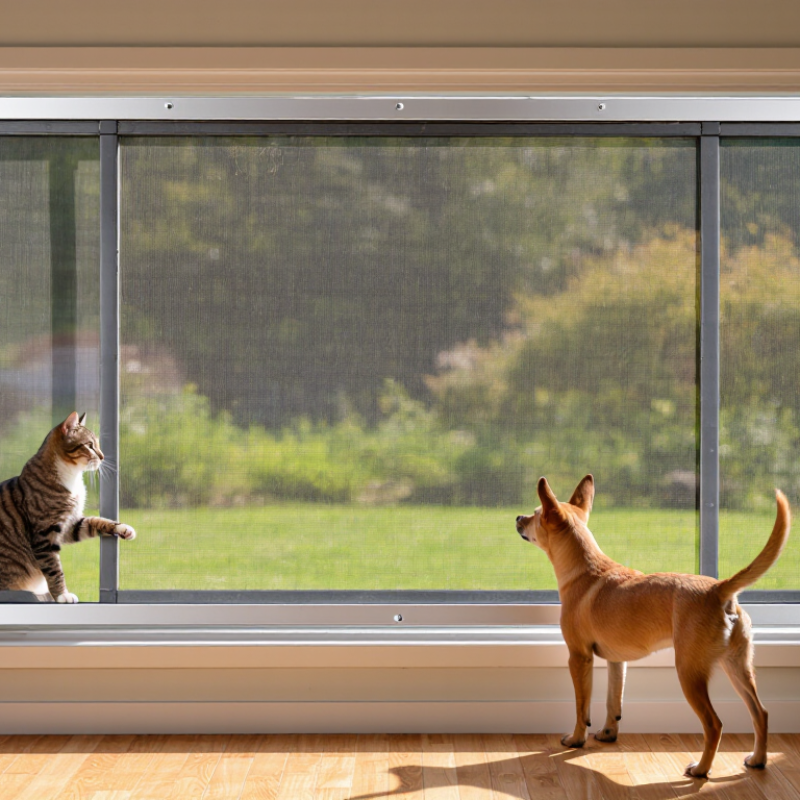
Cats often test a screen with repeated claw strokes, catching individual strands and widening tiny breaks. Dogs may lean or spring against it when they see movement outside. The weakest points are often the spline—the rubber cord holding mesh in its frame—and loose frame corners. A screen can look intact yet pull free under pressure. Small details matter.
Ordinary insect mesh is designed to keep insects out, not withstand claws or body weight. ASTM International’s D3656 specification covers insect-screen materials; it is not a pet-impact rating. Fiberglass mesh can tear, while metal mesh may dent or loosen at the edges. Sun exposure and age can make some materials brittle, though damage varies with climate and upkeep. A quick hand check may miss a weakened spline.
The scale of pet ownership makes this a common household concern. The American Pet Products Association’s 2025 State of Pet Ownership report estimates that 94 million U.S. households have at least one pet. That figure measures ownership, not screen failures, so it should not be read as a damage rate. Still, it helps explain why insect screens can face more force than their everyday design anticipates. That assumption is easy to make. I have overlooked the frame, too.
For pet-resistant window screens, start with the mesh, not the color. Look for tightly woven, tear-resistant material made for repeated contact with paws and claws. PVC-coated polyester is often thicker than standard insect screen and can handle more rubbing, though quality varies. Press the sample gently; it should feel firm without seeming brittle. Check the product details for mesh thickness and abrasion resistance, rather than relying on the phrase “pet proof.” No screen is indestructible.
Fit matters just as much. A strong mesh can still pull loose if the spline, frame, or corners are worn. Inspect the screen for gaps, frayed edges, and bowed sections, especially near a sunny windowsill where a cat likes to perch. Choose a mesh that fits the existing frame securely, and avoid stretching it so tightly that the frame bends. I have seen small loose corners invite persistent pawing. Easy to miss. Clean the mesh with mild soap and a soft brush; harsh scrubbing can weaken coatings over time. Most importantly, treat a screen as an insect barrier, not a safety guard. Keep pets away from open windows unless a separate, secure barrier is installed.
Choose Durable, Pet-Resistant Screen Mesh
Mesh count is calculated from the nominal horizontal and vertical mesh dimensions. Higher mesh counts can provide a tighter opening pattern, but pet resistance also depends on material strength, reinforced edges, secure spline installation, a rigid frame, and regular inspection. Actual specifications may vary by manufacturer and product.
A strong screen begins with a frame that stays square under pressure. Check each corner for separation, then press gently along the frame; flexing or rattling can signal loose joints. Replace bent frames rather than forcing them back into shape. A snug fit matters. The U.S. Consumer Product Safety Commission’s window-fall guidance reports that about 3,300 children aged five and younger receive emergency-room treatment for window-fall injuries each year. That figure concerns children, not pets, but it reinforces an important point: an insect screen is not a safety barrier. Keep windows secured when pets are nearby.
Inspect the fasteners, too. Tighten loose frame clips or screws, and replace missing or corroded hardware with compatible parts. Make sure the screen sits evenly in its track, with no corner gap a paw can catch. Small gaps matter. If the frame uses a spline, check that it holds the mesh firmly without bulging or slipping. For a pet that repeatedly paws or leans against a screen, add a properly fitted reinforcement panel or consult a window professional about a stronger frame. Don’t overtighten screws; they can distort thin frames. I’ve found that quick visual checks are easy to skip, especially after cleaning, so add them to a regular window-care routine. Even a reinforced screen can fail, and that uncertainty is worth respecting.
A pet-proof window starts with a barrier, not wishful thinking. I once trusted a tightly fitted screen, and that was a mistake. A determined cat can bend weak mesh within minutes. Install a rigid guard inside the window frame, leaving enough space for ventilation. Choose smooth edges and secure every corner with screws or reinforced clips.
The American Pet Products Association’s 2023–2024 National Pet Owners Survey estimates that 66% of U.S. households own a pet. That makes practical escape prevention relevant in millions of homes. Add a second barrier, such as a clear acrylic panel or strong interior grille. Keep it several inches away from the screen. This gap reduces claw pressure and prevents direct contact.
Redirection matters too. Place a stable cat tree, padded perch, or chew-safe toy away from the window. Reward calm behavior there with treats or quiet praise. Dogs may respond better to a shaded bed positioned across the room. The ASPCA estimates that about 6.3 million companion animals enter U.S. shelters annually. Preventing one risky escape is worth the extra setup. Inspect barriers weekly, especially after storms or energetic play. I still check mine manually; visual confidence can be misleading. A loose fastener may look harmless until a pet leans against it.
Pet-proofing starts with inspection, not a stronger-looking mesh. APPA’s 2023–2024 National Pet Owners Survey reports that 66% of U.S. households own a pet. More homes therefore face clawing, leaning, and repeated nose pressure against screens. Check every screen monthly, especially near sofas, shelves, and favorite window perches. Look for loose spline, stretched mesh, bent frames, and tiny tears near corners. Small damage grows quickly.
Use a flashlight from inside the room. It reveals gaps that daylight can hide. Press the frame gently; it should not flex away from the track. Clean dust with a soft brush, then use mild soap and water. Dry the frame completely before reinstalling it. The 2023 American Housing Survey covered roughly 73,000 housing units and examined conditions affecting housing quality. Its broad scope supports a simple maintenance lesson: overlooked components deserve regular checks.
Replace badly stretched mesh instead of covering it with tape. Tape can peel and create a tempting edge for claws. Add a rigid pet-resistant panel only after confirming the frame and fasteners can handle pressure. Do not treat an insect screen as fall protection. Recheck after storms, moving furniture, or a new pet’s arrival. A perfect schedule is unrealistic. Still, a five-minute seasonal check may prevent a costly failure. Forgetting one window is easy. That is the part worth correcting.
Cats can catch mesh strands with their claws and widen tiny tears. Dogs may lean or spring against screens when they spot movement outside.
The rubber spline can loosen, and frame corners may pull apart. Check these areas closely. A screen can look fine but still shift under pressure.
It is designed to keep insects out, not resist claws or body weight. Do not use it as fall protection.
No. The frame and fasteners must also handle pressure. I used to focus on the mesh and overlook the corners.
Check them monthly, especially near sofas, shelves, and favorite window perches. Look for stretched mesh, bent frames, loose spline, and small corner tears.
Shine a flashlight from inside the room. It can reveal gaps that daylight hides. A gentle frame press can also show movement.
Remove dust with a soft brush, then use mild soap and water. Let the frame dry completely before reinstalling it.
Replacing badly stretched mesh is usually better. Tape can peel and leave an edge that attracts claws. It is an easy detail to miss.
Recheck after storms, furniture moves, or a new pet arrives. A five-minute seasonal check helps, though I sometimes forget one window.
Keeping pets safe around windows starts with understanding how screens become damaged. Claws, teeth, jumping, and repeated pressure can weaken ordinary mesh, loosen frames, or push out poorly secured fasteners. Learning how to make window screens pet proof means choosing stronger, pet-resistant mesh and installing it in a well-supported frame. Reinforcing corners, replacing weak clips, and securing the screen tightly can help prevent pets from creating gaps or forcing the screen outward.
Additional protection can come from placing a sturdy barrier near the window, rearranging furniture that encourages climbing, and redirecting pets with toys or comfortable resting areas. Regular inspections are also essential. Look for tears, loose edges, bent frames, and damaged fasteners, especially around windows your pets use often. Cleaning the screens gently and repairing small problems early can extend their service life while reducing the risk of escapes, falls, or further damage.

Fintrace Window